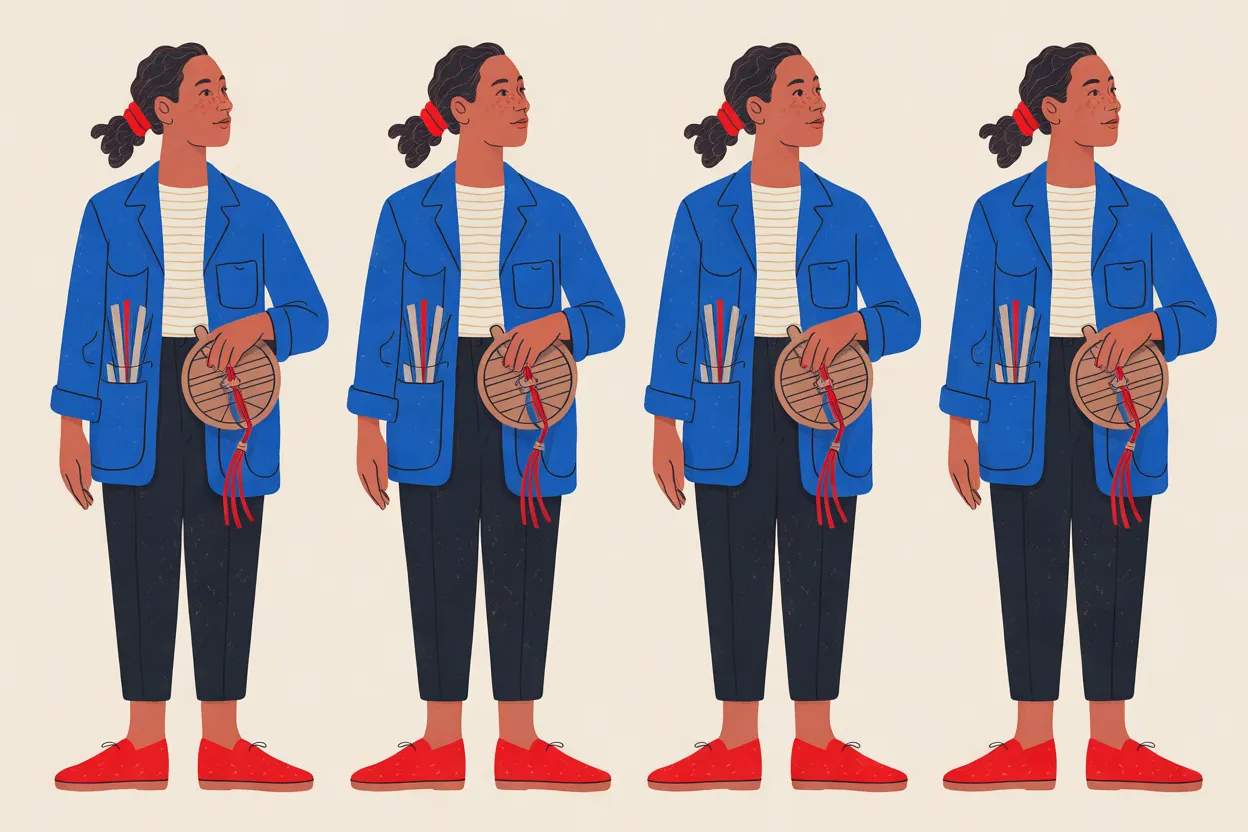
A scene from your world
Twenty to five
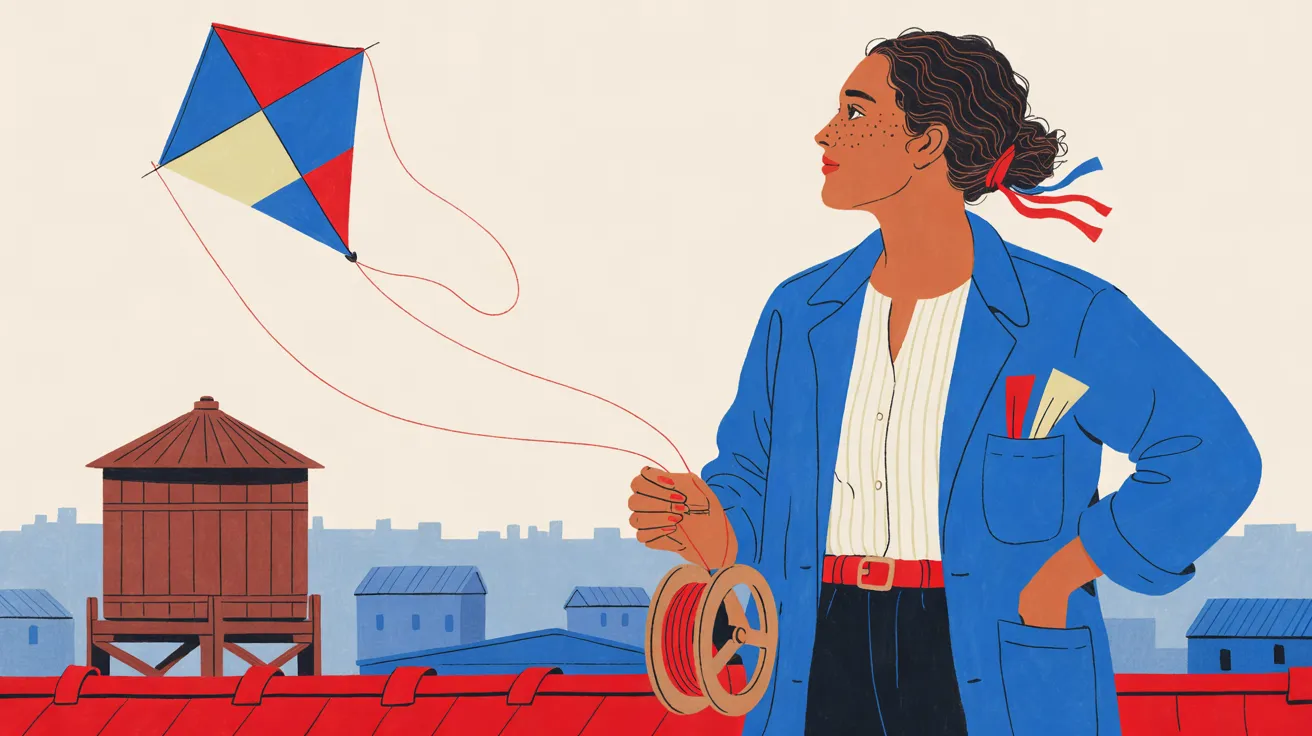
At four o’clock the Kite Maker climbs the ladder to the tower roof with a new kite under one arm. It is a diamond of four patches stitched together: blue from the dye works, red from the print shop, cream from the laundry’s retired sheets, and one striped corner from the upholsterer two roofs over. Every roof on the block gave her a piece. None of them match, and each of them, she has been told, is the important one.
She lays out the afternoon the way she always does. The reel, wound with red line. The bag of tails. The three old kites that always fly, in a row along the parapet: the blue one, the cream one, and the red one that sulks if it goes up last. Then she checks the wind: a wet finger, the windsock on the chimney next door, the laundry on the next roof hanging straight down. Nothing yet. The river wind comes up at twenty to five most days, and it does not like to be watched.
At twenty to five it comes. The laundry lifts first, then the windsock, then the loose ends of the red cloth in her hair. She launches the old kites one after another, letting out line in short pulls, and they climb over the flat roofs in a ladder of blue, cream and red. Across the block people step out of roof doors and look up. Someone on the print shop roof raises a hand.
Then the patchwork kite. It goes up crooked, leans, and dives at the water tower. She reels it in and tries again. It dives again, the other way. On the print shop roof they say it is the stripes. On the dye works roof they say it is the red. She does not argue. She knots a longer tail from the bag, blue and cream and red, ties it on, and gives the kite line. Then a little less.
It climbs. It goes past the cream one and the blue one and the red one, past the height where the old kites always stop, into the cleaner wind above the roofs, and it sits there, steady, the four patches catching the low sun one after another. On every roof someone points up and says, that one’s ours. Every one of them is right.
She ties the line off to the third rung of the water-tower ladder and sits down on the warm tar paper. When the sun goes down behind the roofs she brings the old kites in, one at a time. The patchwork one she leaves up a while longer. Nobody asks which roof it belongs to anymore. It is up. That is where it is from now.